Built as one system
We don't treat Facebook and Instagram ads as isolated campaigns. They're part of a larger system built to learn, adapt and compound over time.
Meta Ads
Meta's platforms are incredibly effective at generating demand — but only when campaigns are structured with intent, tracking, and clear decision-making behind them.
We don't treat Facebook and Instagram ads as isolated campaigns. They're part of a larger system built to learn, adapt and compound over time.
For a local business with no search history yet, paid social is the quickest way to go from invisible to in front of the right people.
These tools let us hone in on your audience and put your offer in front of the people most likely to actually convert — not everyone.
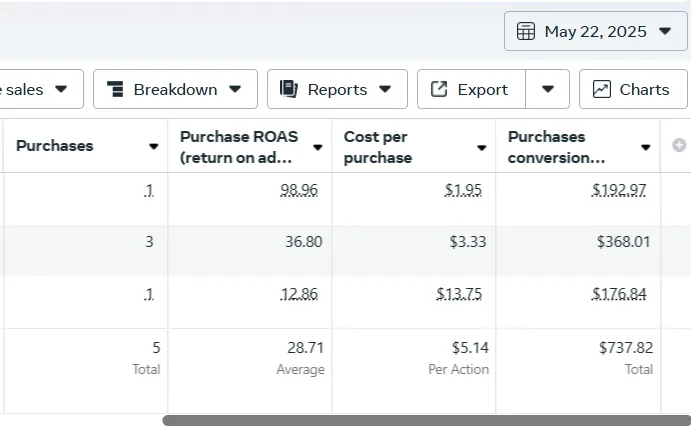
Recent results across client accounts
How the platform actually works
To get real value out of Meta — the parent company of Facebook and Instagram — you first have to understand how the platform actually works.
Facebook and Instagram are free to use because the app isn't the product. Meta's everyday users aren't the customer either; their attention is what's being sold. Meta's real customers are the businesses that advertise.
Behind the posts, stories and reels is an advertising system built to capture attention, organize it, and sell access to it to the right businesses.
Used correctly, Meta isn't about chasing likes or inflating follower counts. It's about turning attention into measurable revenue.
This is where most businesses realize Meta isn't social media in the traditional sense — it's a marketplace for attention, built to produce results you can measure in dollars.
What Meta is actually good at
Lead generation and e-commerce are not the same campaign with a different budget. They need different structures, different events and different audiences — and a build made for the wrong one quietly wastes spend.
Built to convert, not to collect
Meta is especially powerful for service businesses that don't rely on search intent alone.
Instead of waiting for someone to look for you, we introduce your offer to the right audience — then capture interest through structured lead forms or landing pages.
Works especially well for
The goal isn't volume. It's qualified leads at a cost that makes sense.
A distribution engine for product brands
For product-based brands, Meta becomes a distribution engine rather than a billboard.
We structure campaigns to
E-commerce on Meta only works long term when the feedback loops are installed correctly. Without tracking and structure it gets expensive quickly. Done properly, it scales.
Being seen consistently, not occasionally
Not every campaign is immediate lead capture. Sometimes Meta's job is to keep you present in the market.
That means
Visibility plus structure equals familiarity — and familiarity raises conversion rates across every other channel you run.
The part nobody sets up properly
Targeting is not picking interests off a list. The accounts that win are the ones feeding Meta clean signal about who already bought, who nearly bought, and who looks like both.
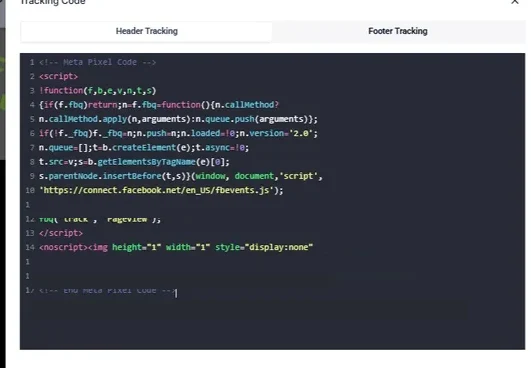
That signal comes from the pixel and the conversions API. Without it you are asking the algorithm to guess, and paying for the guess.
Built from your own data — customer lists, site visitors, video viewers, people who opened a lead form and abandoned it. Your warmest traffic, addressable directly.
Modeled off your best custom audience, not off your whole customer list. A lookalike of purchasers behaves nothing like a lookalike of all site traffic.
Someone who viewed a product yesterday and someone who bounced off the homepage in March should not see the same ad, or the same budget.
The one everyone skips. Existing customers, current leads, recent purchasers — excluded so budget goes to new demand instead of re-selling people you already have.
Browser pixel alone loses events to ad blockers and iOS. Server-side CAPI recovers them, so optimization is trained on what actually happened.
Run your own numbers
First, what can you actually afford to pay for a lead? Second, what will your budget buy, and how quickly will Meta figure your account out? Neither of these is a gate you have to pass — they just tell you what to expect, which is the thing most people never get told.
Question one
A lead is worth
$120
Your break-even. Pay less than this per lead and the campaign makes money — regardless of how big your budget is.
Comfortable target
under $40
Roughly a third of break-even, which is a 3× return on ad spend.
Question two
Leads a month
43
Real volume at a workable cost. That is a business, not a science experiment.
How fast Meta learns
~10 conversions per ad set, per week
Below Meta's 50-a-week ideal, so expect a longer, noisier learning period. That is normal at local budgets.
About that 50-a-week number. Meta stabilizes an ad set fastest once it sees around fifty conversions in a week. At a $40 lead that would mean roughly $8,700 a month — which almost no local service business is spending, and shouldn't be.
So read it as a speedometer, not a gate. Below fifty, campaigns still run and still make money — Meta just labels them "learning limited," which means slower stabilization and noisier week-to-week numbers. Plenty of the accounts I run sit there permanently and are comfortably profitable. Profit comes from question one; question two only tells you how bumpy the ride is.
What actually goes wrong at smaller budgets isn't the budget. It's splitting it across four ad sets, or judging it in the first week and changing everything. What a lead should cost in your trade →
Not one good month
A single strong screenshot can be a fluke. These are non-overlapping weeks pulled from one e-commerce account — different weeks, no double-counting, and none of them came back under 12x.
Across the whole run — 2 May to 31 July — that account did 270 purchases and $33,454 in tracked value at 7.61x overall. The full-period number is lower than the sample weeks because it includes the ramp-up and the quiet stretches, which is what an honest average looks like.
Set up the right way
Your profiles and ad accounts remain fully yours. We're added as a partner, never as an owner, so you keep complete control of your assets and your data.
If the accounts don't exist yet, they're created under your business email. Verification or credential recovery is sometimes needed, but setup usually takes 30–45 minutes.
Tracking is installed correctly from day one — pixel, privacy policy and conversion events configured to measure real revenue, not just clicks.
Under the hood
Ads don't operate in isolation. For campaigns to perform, the plumbing underneath has to be right.
Connected directly to the site rather than bolted on through a third-party tag.
Required by Meta, and the thing that gets accounts restricted when it's missing.
Events that map to bookings, purchases and calls — not page views.
Somewhere for the click to land that's built to finish the job.
So a lead becomes a follow-up automatically instead of sitting in a notification.
When the backend is structured correctly, performance gets measured in leads, purchases and revenue — not impressions. And campaigns improve over time, because the system is built to learn.
FAQ
Published 2026 benchmarks put the blended cost per lead for home services around $34 on Meta, with high-ticket trades like roofing and HVAC installs running past $115. Average cost per click sits near $2.30. As a practical floor, campaigns need roughly $1,000 a month in ad budget to produce enough data to improve — below that results stay erratic no matter who runs them. Full breakdown by trade here.
Creative fatigue, and it happens faster than it used to. Meta's delivery system reads your creative to decide who sees the ad, so it exhausts that signal quicker than the old targeting model did. Ads that used to run for months now fade in weeks. The fix is a production schedule — new variants entering the account on a rhythm, not a scramble once performance drops.
They do different jobs. Google captures people already searching for what you sell, so leads cost more and generally close better. Meta interrupts people who were not looking, so leads cost less and need faster follow-up. Running both usually beats running either harder, provided you can answer the phone quickly enough to handle the softer Meta leads.
No. Plenty of the best-performing creative for local services is before-and-after work, the job being done properly, or a real customer on a phone camera. Being on camera helps in some categories, but it is not a requirement — showing the work convincingly matters far more than showing your face.
Three to five days minimum without touching it, and realistically thirty days for a stable read. Each ad set needs roughly fifty conversion events before delivery settles, and editing the budget, audience or creative resets that clock. Watching for thirty-six hours and then changing everything is the most common way a workable campaign gets killed.
They stay yours. Campaigns are built inside your Business Manager, with your pixel, your datasets and your custom audiences. You keep the conversion history and the creative library.
Most accounts are running ads without the tracking underneath. That's usually where the jump comes from.
Let's Talk