Free diagnostic call
30 minutes. No pitch.
We walk through your current operation, identify the bottlenecks where AI would actually move the metric, and tell you honestly whether you need a custom build or something simpler.
AI Automation
Custom AI workflows trained on your knowledge base, wired into your stack, and given the tools to actually take action. Not a flashy badge — a working system.
The technology is finally here. We build with it.
It can write generic emails. It can answer generic questions. What it can't do is understand the SOP you wrote in 2024, remember the customer you talked to last Tuesday, or know which leads are worth your time and which should go to your assistant.
The model is fine. The integration is what makes it useful — and that integration is custom, every time.
Understanding the AI ecosystem
A real AI deployment isn't one model — it's four layers that have to work together. We build them around your business, not the other way around.
What it is
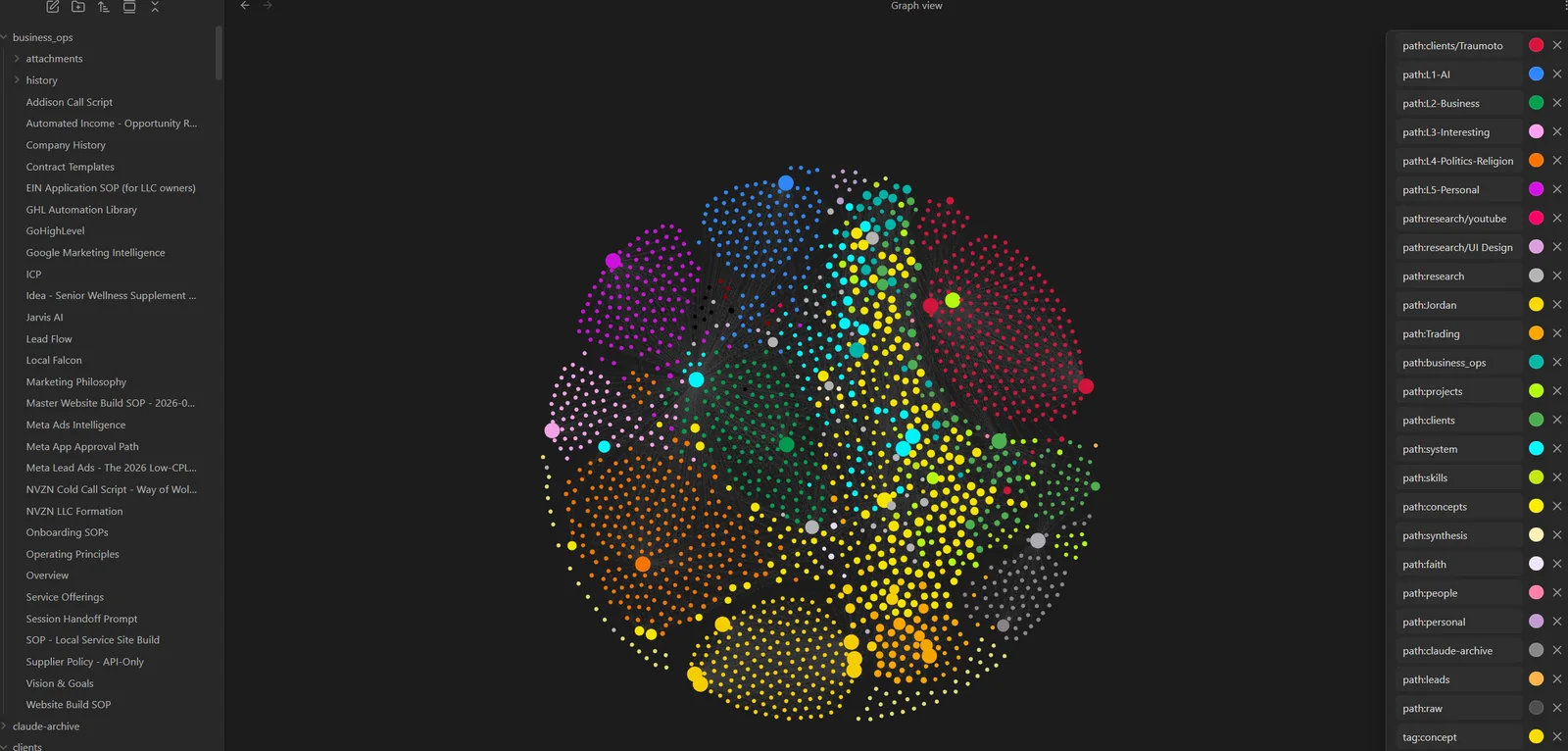
Your SOPs, client history, past projects and internal documents, indexed so the AI can reference them the way a senior team member would.
Why it matters
Gives the AI context. Instead of generic answers you get answers that reference your actual playbook, your actual clients, your actual past decisions.
What it is
The AI is wired into your real tools — GoHighLevel, Twilio, Google Workspace, Zapier, your dashboards. It can read records, send messages, update statuses and schedule appointments.
Why it matters
Turns AI from a chatbot that talks at you into an assistant that does work for you — with auditable logs of every action it takes.
In development — the tooling exists, the experience does not yet. Listed because it is where this is heading, not because it is on the menu today.
What it is
Inbound and outbound conversations across SMS, email and voice — tuned to sound like your business, not a chatbot. It reads sentiment and adapts.
Why it matters
When it is ready: leads caught at 2am, qualified and booked, with a hand-off to a human the moment something needs judgment. We are not there yet, and we will not sell it until we are.
In development — this one sits downstream of the conversational layer, so it cannot be live before that is. Being wired in now.
What it is
AI-augmented internal tooling. Dashboards that summarize themselves, meeting prep that pulls the right context, documents drafted in your voice.
Why it matters
When it is ready: no more prep tax on every meeting, report and recurring document. You make the judgment calls; the system does the legwork that used to eat your week.
Not theory
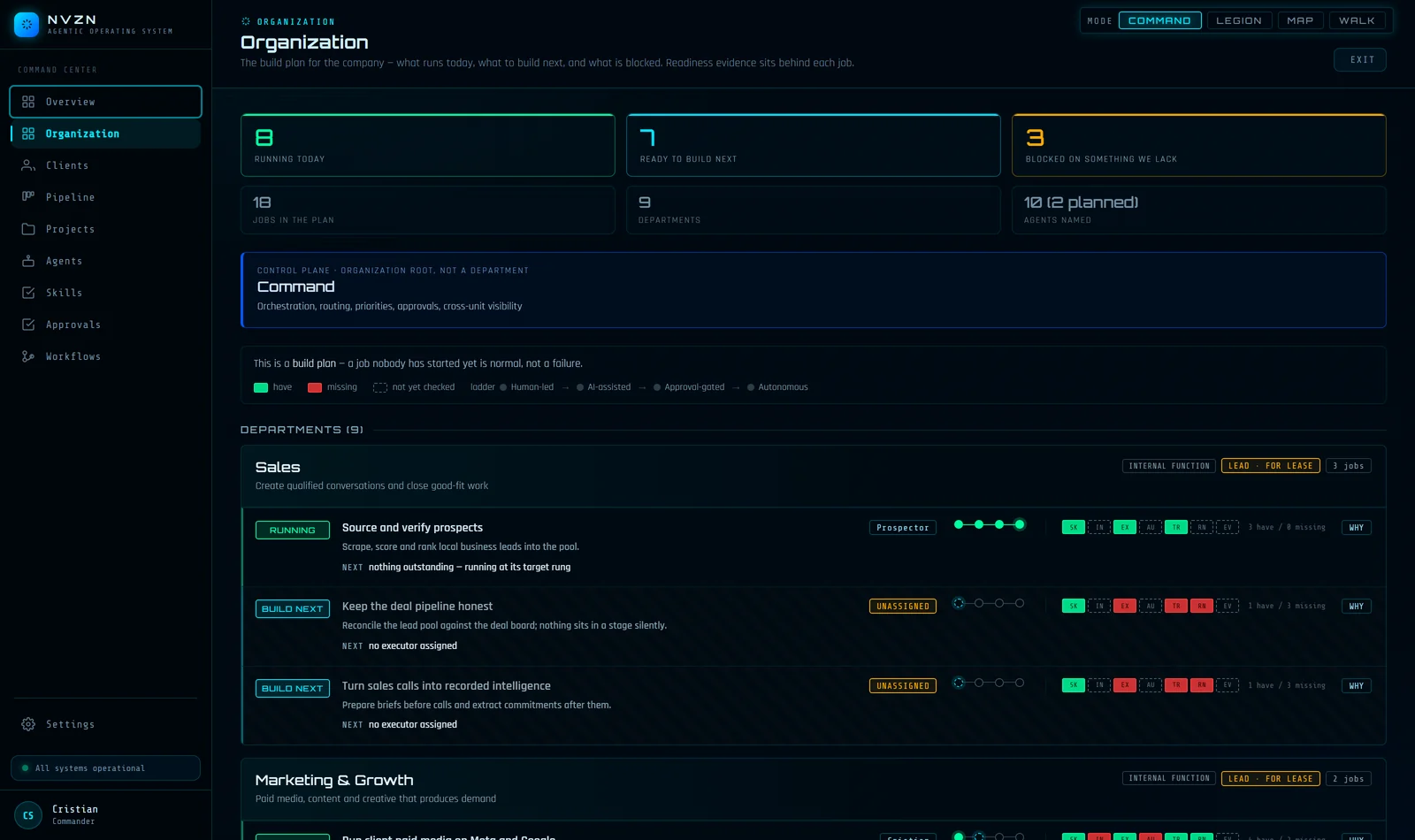
Everything on this page is running right now on a system called A.R.I.A — the assistant I built for NVZN. It indexes 1,673 notes from my own vault, drives a swarm of named agents, and orchestrates three different models in one session.
That is the difference between an AI consultant who has read about this and one who ships it daily. I am not selling you a workflow I found in a course.
Serving Naples, Bonita Springs, Estero and Southwest Florida.
Each layer feeds the next. Conversations enrich the knowledge base. The knowledge base sharpens the action layer. The operations layer surfaces what to refine next.
Compounding leverage — that's the actual point of building custom AI.
How we start
AI automation isn't a productized service. Every business has different bottlenecks, different stacks, different data. We don't quote until we've diagnosed. The diagnostic call is free — scope and pricing get built together, after we both understand what we're actually solving.
30 minutes. No pitch.
We walk through your current operation, identify the bottlenecks where AI would actually move the metric, and tell you honestly whether you need a custom build or something simpler.
You get the document. You decide.
If there's a fit, we write up exactly what we'd build, how long it takes, what it costs and what success looks like. Nothing happens until you sign.
AI could seem overwhelming. We make it easy to understand.
Let's start with a diagnostic. 30 minutes, no pitch.
We'll figure out together whether a custom AI build actually fits your business — and if it does, what to build first.
Let's make AI work for your business.
Book the diagnosticFAQ
It depends entirely on what you are automating, which is why there is no menu price. The honest framing is that it should be measured against the hours it removes — if a workflow saves several hours a week of admin, it pays for itself quickly. The first conversation is scoping which jobs are worth automating at all, and plenty of them turn out not to be.
With work that is repetitive, rule-shaped, reversible and internal — lead intake and tagging, review requests after completed jobs, recurring reporting, first drafts of follow-up messages. Start behind the scenes rather than in front of customers, because that is where mistakes are cheap and correctable. The full reasoning is here.
Not in anything I build. Drafting, preparing and staging are all automated; anything that reaches a customer, spends money, publishes publicly or deletes something waits for a human to approve it. The cost of being asked is a few seconds — the cost of a wrong automated send is a relationship.
The model is the commodity part. What makes it useful is the layer around it — your actual SOPs and client history indexed so it answers from your business rather than the internet's average, wired into the tools you already run, with corrections stored somewhere it reads before it starts work. Generic AI gives generic output because a description of your business averages out to every business.
Two things make that survivable. Every action is logged in plain language, so you can always answer "what did it actually do" — and the approval gate means the expensive mistakes never reach anyone. Anything unattended is limited to work that is reversible by design.
The knowledge and memory layer and the action layer — wiring AI into real tools with logs and approval gates — are live and running today. The conversational layer and full operations layer are still being built and are marked as such on this page. I would rather tell you that than sell you a roadmap.